
 Русский
  Ўзбекча

Reception and diagnostic department
- RCPO
- Departments
- Reception and diagnostic department

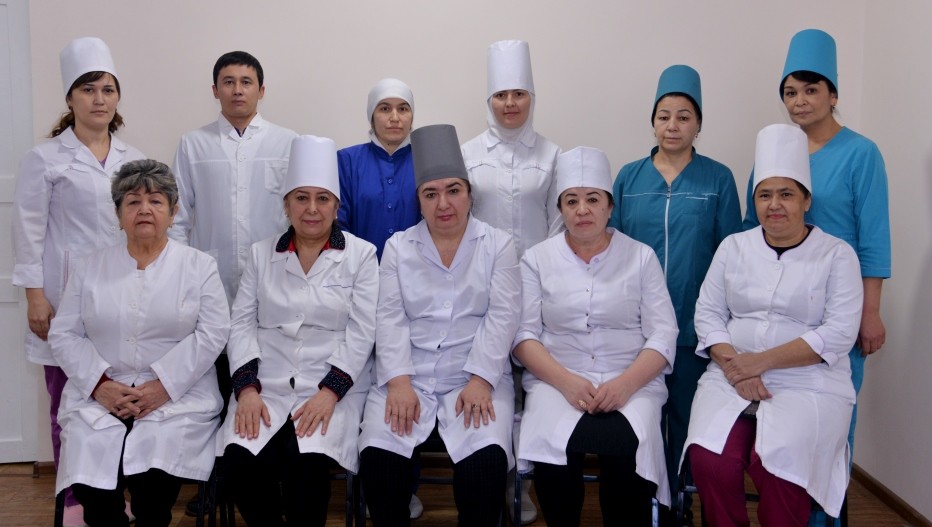
The head of the department is a traumatologist-orthopedist
Highest qualification category
Nosirova Nikhoyat Irgashevna.
Reception and diagnostic department consists of:
1. Consultative polyclinic
2. Radiology room (X-ray, MSCT)
3. Clinical laboratory.
4. Functional diagnostics room
5. Computer podometry office.
6. Emergency room.
The Reception and Diagnostic Department of the RCDC provides qualified medical care to the child population.
Reception is conducted by the following specialists: pediatric orthopedists, neurologist, functional diagnostics doctor. Our doctors diagnose and treat various diseases of the musculoskeletal system, dynamically monitor the health of children, carry out preventive examinations, and develop healthy lifestyle skills in patients.
All doctors of the department regularly improve their professional qualifications and have valid certificates. PDO is equipped with modern equipment. The available diagnostic medical equipment allows for a complete examination in a short time.
In the consultative polyclinic, the leading specialists of the center, candidates and doctors of science carry out consultative reception of children and adolescents with congenital and acquired diseases and the consequences of injuries of the musculoskeletal system, take part in assessing the immediate and long-term results of treatment of inpatients and outpatients. During admission, according to indications, patients are selected who need inpatient treatment at the center.
Consultative reception of patients is carried out free of charge if there is a referral from the clinic from the place of residence or on a paid basis. Paid consulting services are provided in accordance with the order of the Ministry of Health of the Republic of Uzbekistan.
At present, about 12,000 patients receive and provide medical advice at the consultative polyclinic annually.
Radiology room
The radiation diagnostics room is equipped with modern expert-class diagnostic equipment, which allows to carry out almost a full range of examinations in a diagnostic search. The main task of the department is high-precision, timely diagnosis of the pathology of the patient's organs and systems using the required amount of imaging methods. The office has a radiologist, Yu. Shakirov.
The main activity is the diagnosis of pathology of the musculoskeletal system: congenital malformations of the musculoskeletal system, systemic diseases of the skeleton, injuries and their consequences, other secondary deformities of the skeleton, diseases of the central nervous system of various origins. Researches of the osteoarticular apparatus are carried out on a modern X-ray diagnostic apparatus from Canon (Japan). The digital X-ray machine also takes pictures with stress.
Multispiral computed tomography (MSCT) is considered the most modern method of visual examination and belongs to the latest generation of scanners for examining human bone structures, in assessing the state of bone tissue (analysis of anatomical relationships in joints, condition of articular surfaces, destructive and degenerative-dystrophic changes in bone tissue of the skeleton ). Thanks to the high scanning speed, the entire human body can be examined in a few seconds. Due to the design of the device, it is possible to examine large patients (up to 150 kg). The software allows 3D reconstruction and many other types of image reconstruction.
The staff of the office carry out their work in close cooperation with the doctors of the medical departments, which allows maintaining a high level of pathology recognition and minimizing diagnostic errors.
Clinical laboratory
The clinical laboratory of the center performs a wide range of laboratory tests aimed at diagnosing patients with pathology of the musculoskeletal system, as well as other types of research.
The laboratory is equipped with modern innovative equipment; quality control of the research is carried out on a regular basis. The laboratory employs highly qualified employees: doctor of the highest category Sh.T. Turdieva, 1 medical assistant, laboratory assistant of the highest category and 1 medical laboratory assistant of the 2nd category.
Clinical laboratory with a large arsenal of laboratory and instrumental research methods, including a general analysis of blood, urine, biochemical blood analysis, determination of blood trace elements and other studies. More than 5,000 examinations are carried out in the clinical laboratory of the RCDC per year.
Functional diagnostics room
In the functional diagnostics room equipped with modern equipment for ultrasound, electrophysiological and neurophysiological studies: Inter Scan 250, Edan, SLE-101 M, Son-Scape, specialized research methods are carried out: ultrasonography of the hip joints, electrocardiography, electroneuromyography and electromyography - everything necessary for a comprehensive analysis of the state of functional systems the patient works as a doctor of ultrasound diagnostics - doctor of the highest qualification category D.A. Abdusattarov.
The functional diagnostics room deals with early and differential diagnosis of diseases and injuries of the musculoskeletal system in children from the first days of a child's life, in particular, congenital dislocation of the hip. Ultrasound of the hip joints is one of the methods for detecting pathological changes in the joints and surrounding tissues. It can serve as an additional diagnostic method for radiography and clinical examination. Studies of bone tissue, cartilage, ligamentous apparatus and internal organs are carried out on a modern SonoScape ultrasound machine with linear transducers 7.5 MHz, which allows examining a child in standard positions and in motion.
Electromyography is also carried out - a method of recording and studying the bioelectric activity of muscles, includes surface electromyography (EMG), needle EMG and stimulation electroneuromyographic (ENMG) techniques based on the analysis of evoked electrical responses of a muscle obtained by electrical stimulation of a peripheral nerve. About 1000 examinations of the abdominal cavity organs - 6511 units, over 200 ultrasound of the hip joints are carried out annually.
Computer podometry room
Computer podometry is a way to diagnose the load on the foot. With its help, specialists determine the correct distribution of a person's body weight on the ankle joint and foot. During the procedure, a map of the foot is displayed on the monitor screen, on which two types of points are marked - on which there is an increased load and points with insufficient load. Using the data obtained, the specialist calculates the podometry index, specifies the diagnosis. After that, a treatment regimen, a set of preventive measures are developed, and the possibility of orthosis is determined. In addition, using a plantograph, you can choose orthopedic insoles and instep supports.
Hospitalization in the Republican Center for Pediatric Orthopedics is carried out on the basis of the advisory opinion of a specialist of the profile department.
To be admitted to the RCDC, you must have:
1. Referral from the polyclinic at the place of residence on the form 777
2. Passport or birth certificate.
3. Medical documents (if available, X-rays, MRI, MSCT)
4. Reception opening hours from Monday to Friday from 8.30 am to 2 pm
5. The center has a comprehensive school. A student arriving for treatment at the center needs to have notebooks and stationery with him.
Also, on a paid basis, services are provided to adult patients according to the tariff approved by the Ministry of Health of the Republic of Uzbekistan.
Conservative and surgical treatment of traumatological and orthopedic diseases for adults.
X-ray and MSCT.
Ultrasound research.
Computer podometry.
You can make an appointment with the consultative polyclinic of the center by calling in advance Monday-Friday from 8.30 am to 2 pm.
Reception phone number 71 2604937.
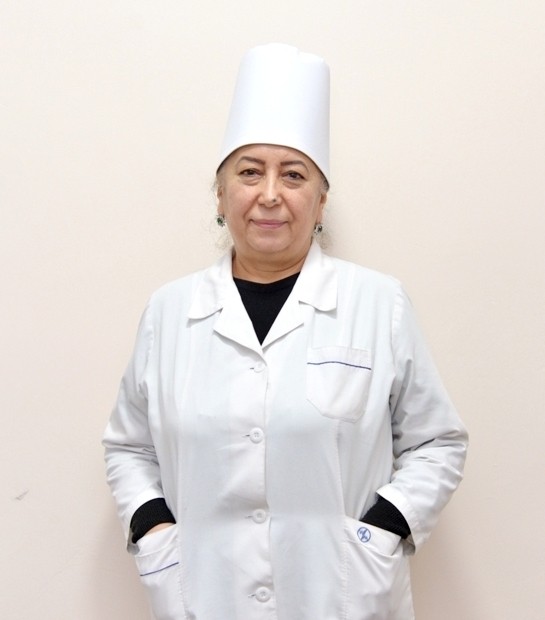
Traumatologist-orthopedist of the highest category

