
 Русский
  Ўзбекча

Department of pathology of the hip joint No. 1
- RCPO
- Departments
- Department of pathology of the hip joint No. 1

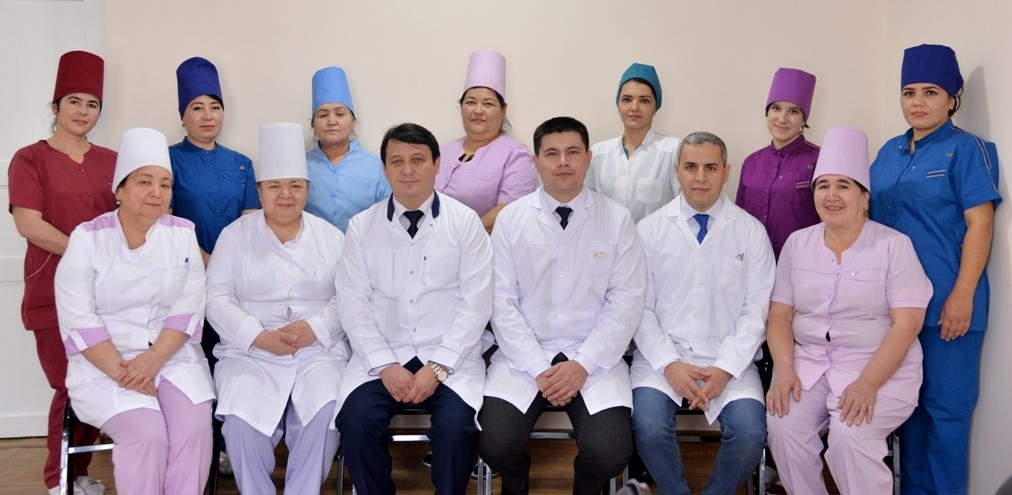
I-th department
The head of the department is a traumatologist-orthopedist of the highest qualification category, candidate of medical sciences -
Alpysbaev Khozhaakhmed Shaikhislamovich.
The department specializes in the performance of high-tech and reconstructive operations on the hip joint for congenital and acquired pathologies using modern surgical methods.
The department has 35 beds, located in 1-2 and 3 and 4-bed wards, equipped with separate bathrooms (superior wards). The department employs highly qualified medical personnel, three out of 4 doctors have the highest qualification category.
The Department of Hip Pathology deals with the treatment of congenital and acquired pathology of the hip joints:
♦ Dysplasia of the hip joint, congenital dislocation and subluxation of the hip;
♦ Consequences of acute hematogenous osteomyelitis - pathological dislocation and subluxation of the hip;
♦ Aseptic necrosis of the femoral head after bloodless reduction of congenital hip dislocation;
♦ Consequences of aseptic necrosis of the femoral head and pathological destructive hip dislocation - multiplanar deformities of the proximal femur;
♦ Legg-Calve-Perthes disease;
♦ Juvenile epiphysiolysis of the femoral head;
♦ Extension-abduction contracture of the hip joint due to congenital shortening and fibrosis of the gluteal muscles;
♦ Varus deformity of the femoral neck;
♦ Spastic subluxation and dislocation of the hip and torsional deformities of the lower extremities in patients with cerebral palsy.
Based on the unique experience in diagnostics and treatment of patients with hip joint pathology, the department has developed a tactic for early functional treatment of neonatal and infants with congenital hip dislocation.
The specialists of the department carry out consultations in the consultative and diagnostic department of the center. To determine the development strategy of the department and the choice of treatment tactics for specific patients, master classes, conferences, and consultations with an analysis of complex cases are regularly held. To determine the development strategy of the department and the choice of treatment tactics for specific patients, master classes, conferences, and consultations with an analysis of complex cases are regularly held.
The department has accumulated extensive experience in the treatment of congenital subluxation and dislocation of the hip, aseptic necrosis of the femoral head after conservative reduction of congenital hip dislocation, the consequences of hematogenous osteomyelitis - pathological dislocation of the hip, Legg-Calve-Perthes disease, varus deformity of the femoral neck, femoral neck. bones, extensor-abduction contracture of the hip joint, etc.
Every year, the department receives treatment for about 1000 children with congenital and acquired diseases of the hip joint. Of these, about 800 patients with congenital hip dislocation and pathological hip dislocations after hematogenous osteomyelitis. Bloodless reduction of the femoral head is carried out using the method of functional traction, followed by the imposition of a hip plaster cast according to Lorenz I and Sheptun in more than 150 patients in compliance with all preventive measures for aseptic necrosis of the femoral head.
The department annually performs more than 400 reconstructive and restorative operations of all categories of complexity: operations aimed at open reduction of the head or centering the head and neck of the femur with corrective intertrochanteric osteotomy and plastic of the acetabular roof or without it up to 250.
Also, every year about 50 patients with extensor-abduction contracture of the hip joint, due to congenital shortening or fibrosis of the gluteal muscles, undergo fasciotomy of the fascia lata of the thigh and Z-shaped lengthening of the gluteal muscles with intraoperative elimination of the above contracture.
A protocol for planning and performing reconstructive operations on the hip joint has been developed and is being applied, which allows performing surgical interventions with precision.
Reconstructive and restorative operations have been developed and implemented for various multiplanar deformities of the proximal femur after aseptic necrosis of the femoral head and destructive pathological dislocation of the hip, taking into account the localization and stage of the pathological process, the patient's age, which ensure the centering of the femoral head in the acetabulum, accelerate the restoration of the epiphysis , improve the congruence of the articular surfaces and the trophism of the hip joint.
Patients with cerebral palsy deserve special attention. Dislocation of the hip joints is a serious complication of cerebral palsy. With spasticity in the adductors of the thighs and rectus heads of the quadriceps muscles, due to the constantly existing increased muscular traction directed diagonally downward and inward, the heads of the femurs are gradually shifted outward. For a quantitative characteristic of the displacement of the hip shows - the index of displacement of the hip (Reimers index).
If the Reimers index is more than 30%, we have a subluxation of the femoral head; if the Reimers index is more than 90% - hip dislocation. Hip subluxations with a Reimers index of more than 40% are subject to surgical treatment. Since 2018, the department employees are the first in Uzbekistan to successfully perform surgical correction of spastic subluxation and dislocation of the hip and torsion pathology of the lower extremities in cerebral palsy. Since 2019, simultaneous centering of the head of both femurs has been performed with intertrochanteric detorsion-varizing-shortening osteotomy of the femur for spastic hip subluxation. Over the past 3 years, more than 100 such surgical interventions have been performed in children with cerebral palsy.
Research in the department aimed at studying new information about the etiology and features of the course of diseases has made it possible to improve the known and develop new effective methods of treating bone pathology of the hip joint, which are protected by copyright.
The department's specialists perform the following types of surgical interventions:
♦ Extra-articular detorsion-varizing osteomy of the hip;
♦ Extra-articular detorsion-varizing femur osteomy with acetabuloplasty according to Pemberton, Lance;
♦ Open reduction of the femoral head with intertrochanteric detorsion-varizing-shortening osteomy of the femur;
♦ Open reduction of the femoral head with intertrochanteric detorsion-varizing-shortening osteomy of the femur and plastic of the acetabular roof according to Pemberton, Lance;
♦ Open reduction of the femoral head with intertrochanteric detorsion-varizing-shortening osteomy of the femur and rotational osteotomy of the pelvis according to Salter;
♦ Open centering of the femoral head with intertrochanteric detorsion-varizing and flexion (extension) osteomy of the femur;
♦ Open centering of the femoral head with intertrochanteric detorsion-varizing and flexion (extension) osteomy of the femur and acetabular roof plasty according to Pemberton, Lance;
♦ Intertrochanteric osteotomies of the femur in Legg-Calve-Perthes disease;
♦ Epiphyseodesis of the femoral head in juvenile epiphysis of the femoral head;
♦ Open centering with modulating resection of the stump of the head and neck of the femoral head with intertrochanteric detorsion-varizing osteomy of the femur;
♦ Open centering with modulating resection of the stump of the head and neck of the femoral head with intertrochanteric detorsion-varizing osteomy of the femur and plastic of the acetabular roof according to Pemberton, Lance;
♦ Fasciotomy of the wide fascia of the thigh and Z-shaped lengthening of the gluteal muscles in case of extensor-abduction contracture of the hip joint;
♦ Extra-articular intertrochanteric detorsion-varizing-shortening osteotomy of the femur with spastic subluxation of the femur with or without acetabular roof plasty;
♦ Open reduction of the femoral head with intertrochanteric detorsion-varizing and shortening femoral osteotomy in case of spastic femoral dislocation with or without acetabular roof plasty;
♦ Simultaneous centering of the head of both femurs with intertrochanteric detorsion-varizing and shortening osteotomy of the femur in case of spastic hip subluxation.
Scientific and clinical developments of the department employees are protected by numerous copyright certificates and patents, are set forth in monographs and scientific articles and arouse the unflagging interest of colleagues, both in our country and abroad.
Currently, the department continues to work on further improving the methods of treating the pathology of the hip joint, taking into account the study of long-term results of treatment, the development of the elements of the hip joint, the age of the child and the data of modern research methods.
The department employees constantly participate with scientific reports in domestic and international conferences, symposia, congresses on traumatology and orthopedics, are members of the Problem Commission on Traumatology and Orthopedics, the Association of Traumatologists and Orthopedists of Uzbekistan, were trained in leading orthopedic clinics in Russia and Switzerland.
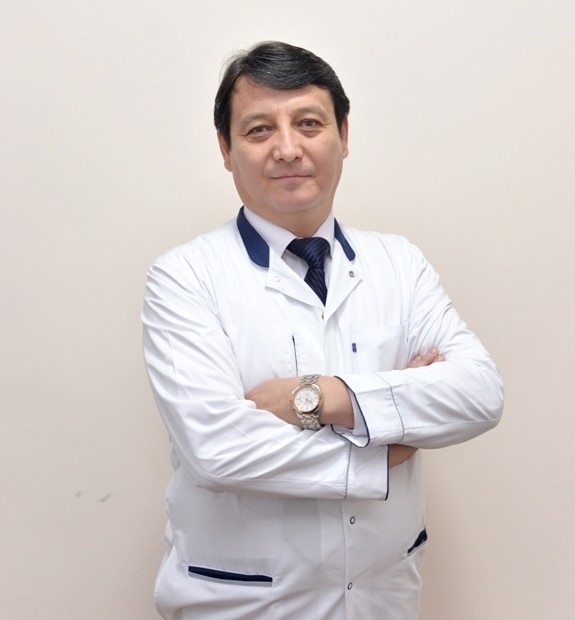
Candidate of Medical Sciences, Traumatologist-Orthopedist of the Highest Category
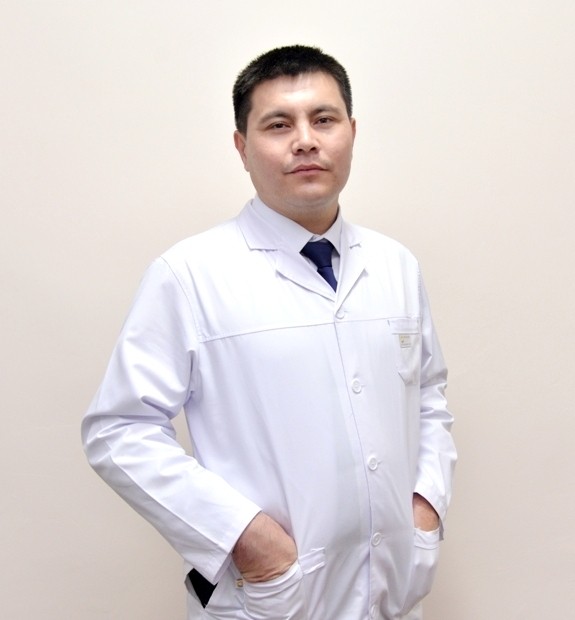
First category doctor
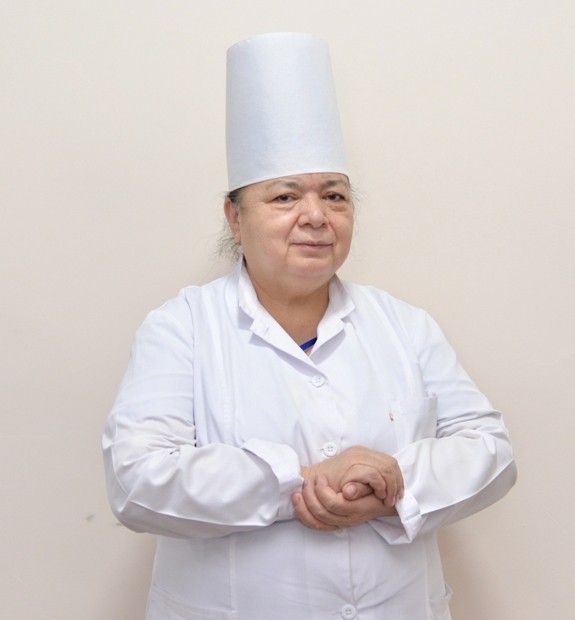
Traumatologist-orthopedist of the highest category


